
Description
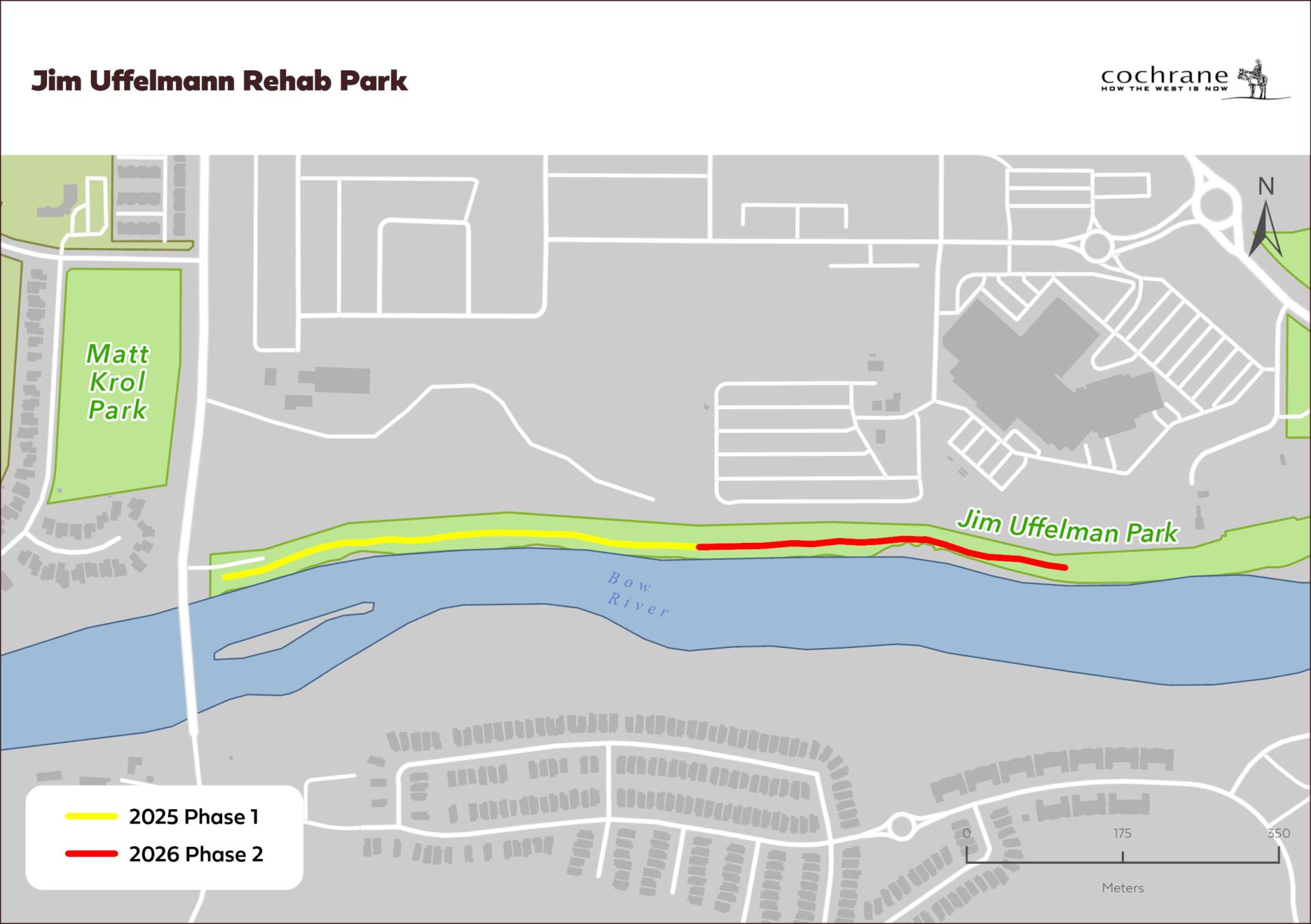
In May 2025, we launched the first phase of riverbank rehabilitation to address significant erosion along approximately 485 meters of the park’s riverbank. This project involves installing natural stabilization materials and native vegetation to stabilize the area and support ecological restoration.
Updates
Building on the foundation established by the 2023 Jim Uffelmann Park Environmental Study and the remediation work completed in 2025, Phase 2 focuses on continuing efforts to address erosion and drainage challenges within Jim Uffelmann Park. This phase targets the remaining sections of the Bow River banks experiencing significant erosion. Riverbank stabilization efforts will include the installation and establishment of willow stakes and native vegetation to control soil erosion, enhance habitat quality, and improve the park’s overall aesthetics. This project will also include two years of post-planting monitoring, weed control, drip irrigation and temporary fencing to ensure successful vegetation establishment.
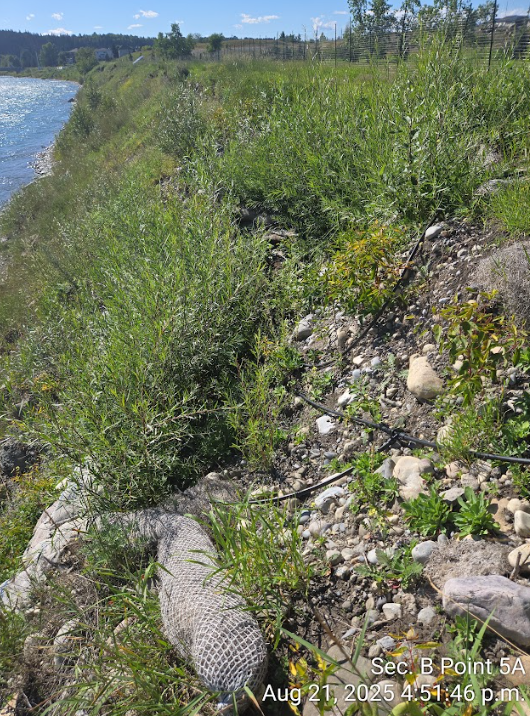
Phase 1 of the Jim Uffelmann Bank Rehabilitation project was successfully completed last year, and Parks staff are encouraged by the results. The live stakes and rooted plants have shown strong germination and growth, aided in part by higher-than-average rainfall over the summer. These favorable conditions have supported healthy vegetation establishment, which is critical to the long-term stability of the restored riverbank areas.
Temporary fencing remains in place around the site and has proven effective in protecting the new plantings. We thank the community for respecting these barriers, which will stay in place through the fall and winter to give the plant material additional time to take root and mature.
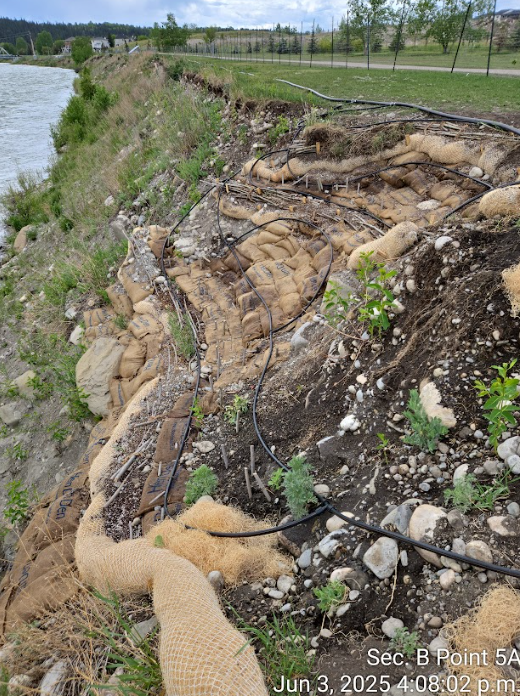
Previous condition
Riverbank erosion and slope instability along the Bow River prior to rehabilitation work in Jim Uffelman Park.
Current progress
Riverbank stabilization and revegetation work underway along the Bow River in Jim Uffelman Park.
Background
Recognizing the Park's importance to the community, Cochrane wanted to understand how the park is being used today and what the current environmental conditions are so that the park can be enjoyed for generations to come. Cochrane worked with external consultant EDS Group Inc. to conduct a geotechnical and environmental assessment to identify any environmentally sensitive areas, and understand current uses for the Park.
The study was initiated because of concerns surrounding the number of conflicts reported to Cochrane between different recreational uses in the Park, visible evidence of bank erosion on the slopes to the Bow River and a desire to understand the environmental sensitivity of the Park.
The environmental assessment identified significant erosion along the riverbanks. One of the recommended actions is to implement erosion mitigation strategies within the park to prevent further degradation.
Impacts to public
Temporary fencing will be in place to protect new plantings and support natural regeneration. The overall impact on park users is expected to be minimal. Parking will not be affected, and the pathway and off-leash dog area will remain open throughout the duration of the work. Visitors are asked to follow all posted signage and stay within designated areas to help ensure the project’s success.
How does this project benefit the community?
Increased community connectivity and care for our open spaces and natural areas.
Strategic alignment
This project supports the 2022-2025 Strategic priority of protecting, nurturing and enjoying our natural landscape, creating a vibrant and active community with connected neighbourhoods and bringing people together physically and socially.